Math102
Intro to Higher Mathematics
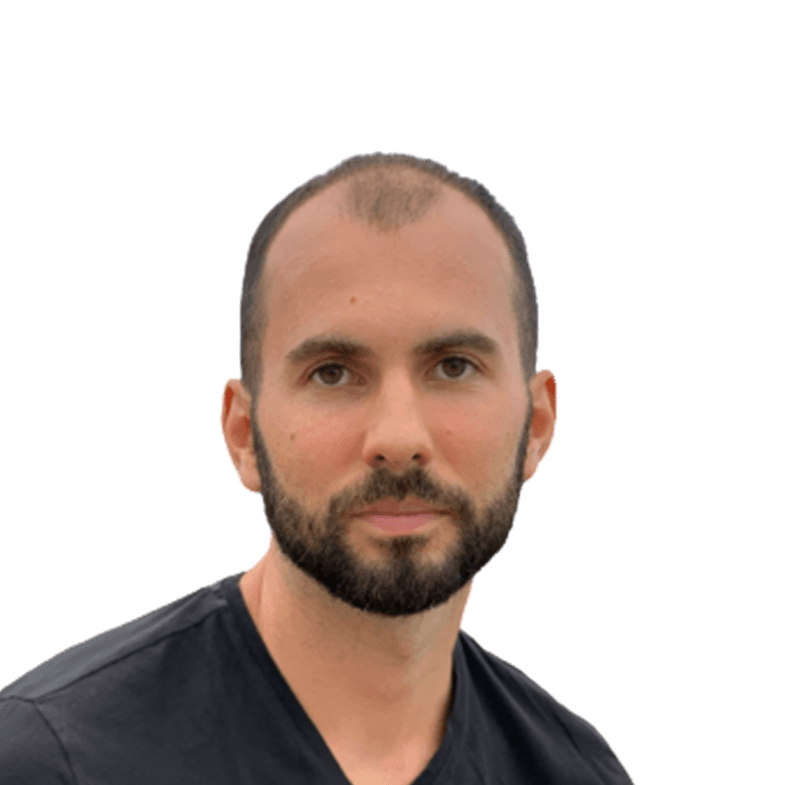
Faculty
Andrey Gavrilyuk
Team Leader of the HSE Team
Course length
Duration
Total hours
Credits
Language
Course type
Fee for single course
Fee for degree students
Skills you’ll learn
Overview
Mathematics can be challenging; this is something almost everyone knows. What is much less known, however, is why mathematics is often so difficult. There are many reasons for this. Contrary to the long-standing belief that proficiency in mathematics is solely determined by natural ability, there is considerable evidence that addressing different types of "mathematical difficulties" can be more effective than simply spending more time (and tears) studying mathematics. The goal of this course is to help students create a knowledge map and a map of "difficulties" in mathematics, as well as to ease the transition from school-level mathematics practices to university-level practices and, more generally, to "higher mathematics."
Learning highlights
- The key challenges students face when transitioning from the school practices to the study of higher mathematics include:
- Different levels of standards and requirements: The standards for rigor in proofs vary significantly. What may seem like a valid solution in school-level mathematics might be considered an immature argument in higher mathematics.
- Broader knowledge base requirements: A more extensive knowledge foundation is required for further progress in higher mathematics.
- A more specialized "language of interaction" and traditions of interaction: This includes specific symbolic notation and shortcut references which may be misleading if judging only by the title.
- A larger workload from the perspective of knowledge and skills to acquire in a short time period.
- Subjective negative expectations of students due to their past experience.
- The course will primarily focus on addressing these key challenges.
- From the perspective of mathematical content, the course will include a review of knowledge related to constructing logically correct and complete proofs (including proofs by contradiction and by induction). Additionally, it will cover the formal beginnings of real analysis, functional analysis, number theory, mathematical logic, and set theory at a level that bridges the gap between school and university-level knowledge.
Course outline
15 classes
Session 1
Modeling the situation, object-oriented approach in mathematics
Session 2
Basics of applied math logic. ‘Two-storey’ argumentation
Session 3
Axiomatic approach and comparing values
Session 4
Axiomatic approach in combinatorics, enumeration and induction
Session 5
Logical connectives and the inference rule
Session 6
Plotting a function
Session 7
Long division of short polynomials, integer division, Euclid algorithm
Session 8
Complex numbers and polynomials
Session 9
Trigonometric functions and complex numbers
Session 10
Midterm
Session 11
Configuration space of a problem, the quantifiers, Venn and Euler diagrams
Session 12
Critical point of view: ‘what if not?’ Proof by contradiction
Session 13
Optimization problems, estimate & example
Session 14
Recap, Q&A, problem solving
Session 15
Final test
Methodology
The course is practice oriented, each class will be supplied with a list of relevant problems for solving in class, discussions and further completion as a home task. Each topic will be accompanied with theoretical blocks, discussions and personal or group in-class solution presentation sessions. The remaining unpresented part of a day’s task becomes a task for self-preparation. One home test is planned for completing at home by the start of the second week. Most of the classes will start with a ‘Quiz of the day’ with an easy question on the previous material of the course
Grading
Awards
- Winner of the 46th International Mathematical Olympiad (IMO),Merida, Mexico
Teacher, trainer, scholar and entrepreneur in education with almost 20 years of experience in 'big math'.
Taught the full range of students from 10 to 65 years old, from having zero background in math to the winners of respectful international competitions. Made his PhD thesis in collaboration in Russia, Canada and Switzerland and came back to Russia to launch his courses on mathematics for adults (after grad people).
See full profileApply for this course
Intro to Higher Mathematics
by Andrey Gavrilyuk
Total hours
45 Hours
Dates
Sep 30 - Oct 18, 2024
Fee for single course
€1500
Fee for degree students
€750
Explore related courses
Filter by campus:

How to secure your spot
Complete the form below to kickstart your application
Schedule your Harbour.Space interview
If successful, get ready to join us on campus
FAQ
Will I receive a certificate after completion?
Yes. Upon completion of the course, you will receive a certificate signed by the director of the program your course belonged to.
Do I need a visa?
This depends on your case. Please check with the Spanish or Thai consulate in your country of residence about visa requirements. We will do our part to provide you with the necessary documents, such as the Certificate of Enrollment.
Can I get a discount?
Yes. The easiest way to enroll in a course at a discounted price is to register for multiple courses. Registering for multiple courses will reduce the cost per individual course. Please ask the Admissions Office for more information about the other kinds of discounts we offer and what you can do to receive one.