DS205BKK
Applied Probability and Statistics
Faculty
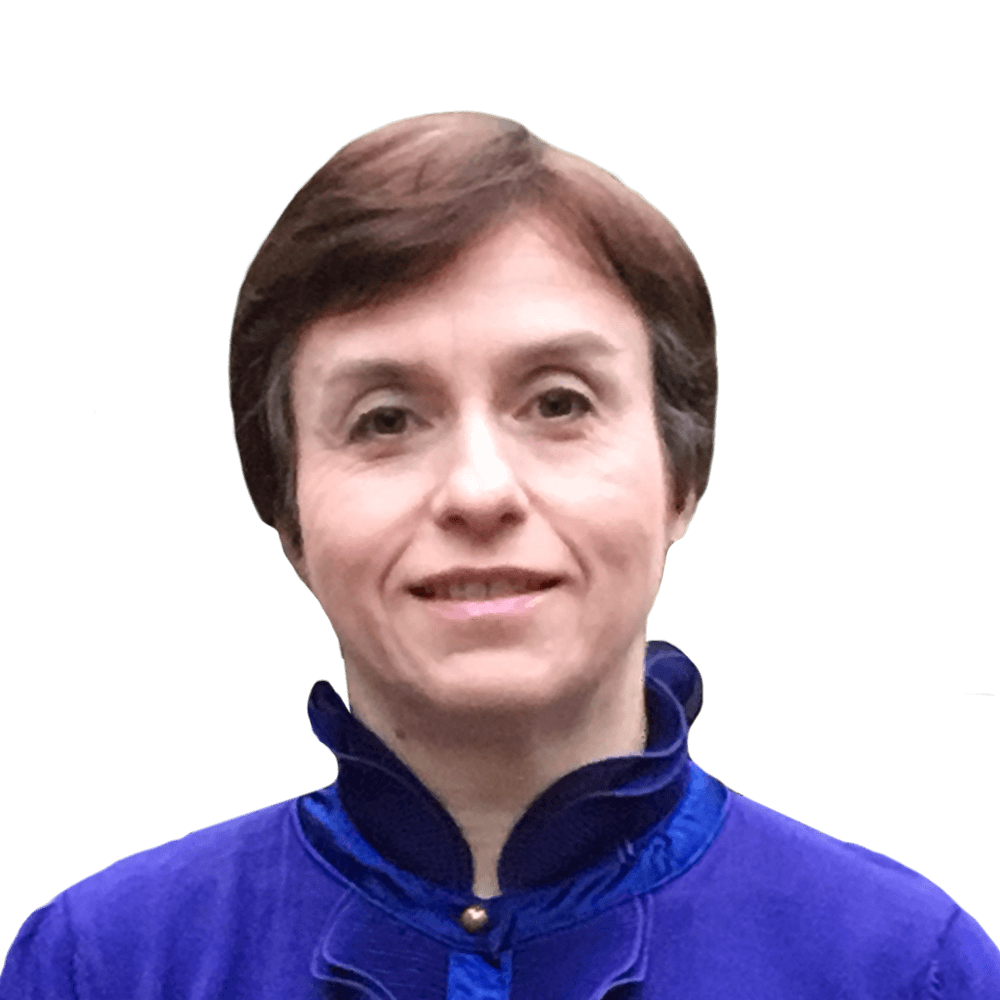
Leah Isakov
Global Head of BioStatistics, Data Management, Programming and Medical Writing at Seqirus
Course length
Duration
Total hours
Credits
Language
Course type
Fee for single course
Fee for degree students
Skills you’ll learn
Overview
This is an applied introduction course to statistical theory. Students will learn the basic concepts of theory and application for statistical inference. They will get an introduction to statistical analysis and critical thinking, including descriptive statistics, probability, sampling distributions, interval estimation, hypothesis testing and regression. They will learn to use the simulation technique for assessments of model fit and estimations.
Learning highlights
- After the course, the students will be able to select an appropriate statistical technique to analyze and interpret the observed data.
- Students should acquire quantitative skills that they can employ and build on in flexible ways.
- The goal is to learn concepts and master tools for working with data and understand experiment design.
- Our goal is to build a strong foundation for practical applications and future courses.
Course outline
15 classes
Session 1
Introduction/review, data types, probability and laws of probability. Random data types.
Statistics, data and statistical thinking.
Methods for describing sets of data.
Measures of central tendency. Statistics, data and statistical thinking. Data visualization.
Statistical computing with R (time permitting).
Session 2
Events, sample spaces and probability.
Birthday problem
Probability calculations and laws of probability review. Conditional probability and independence.
Baye’s Rule.
Random variables. Probability mass function.
Session 3
Distribution, density function, expectations.
Expectations, moments.
Functions of random variables.
Moment generating functions.
Session 4
Measures of quality of estimators.
Sufficient statistics
Completeness and uniqueness.
Central limit theorem.
MOM/ MLE
Session 5
Large-Sample Confidence Interval for a population mean and proportions.
T-statistics and small sample confidence intervals for a population mean.
Session 6
Introduction to hypothesis testing. Type I and II errors, alpha level, p-value.
Inference based on a single sample: a test of hypothesis.
Introduction to Theory of Statistical Tests Likelihood Ratio Tests.
Session 7
Comparing two population means: independent sampling.
Comparing two population means: paired difference experiments.
Session 8
Midterm exam.
Session 9
Categorical data analysis.
The binomial distribution.
Estimating a proportion.
Comparing groups on categorical data.
Chi-square tests.
Large sample confidence interval for a population proportion.
Comparing population proportions (focus on contingency table analysis)
Session 10
More on categorical data.
Small sample test, Yate’s correction, Fisher Exact Test.
Association between measurement variables.
Correlation and regression.
Simple linear regression.
Session 11
Regression diagnostic.
Data transformation.
Multiple linear regression.
Model building.
Session 12
Non-parametric tests.
Non-parametric test about population mean, comparing two populations paired test, sign test.
Non-Parametric test for correlation.
Session 13
Non-parametric test (continues).
Introduction to logistic regression.
Session 14
Logistics regression (continues).
ANOVA.
Session 15
Final exam.
Prerequisites
Calculus (derivative, extremums, integrals, series).
Introductory probability course.
Familiarity with R (or any other statistical software).

Methodology
Combination of theoretical and applied methodology.
Grading
Leah Isakov is a senior leader in the pharmaceutical industry with a unique combination of leadership and technical skills. She has worked in clinical trials for more than two decades and is known for delivering results. Leah has led NDA (New Drug Applications), PMA (Pre-Marketing Approvals) and BLA (Biologics License Applications) and have deep experience interacting with all the major regulatory bodies (FDA, EMEA, PMDA, Russian Ministry of Health, and Health Canada). She also has direct experience successfully managing cross-cultural international teams (USA, China, Japan and Canada). The recent therapeutic areas include Oncology, Infectious Diseases, Cardiovascular, Asthma, Renal Failure and HIV for Phase II-IV clinical trials in drugs and biologics.
As a leader, Dr. Isakov strives to be at the forefront of management practice. She incorporates data-driven decision making and quantitative risk management, and focus on building internal capabilities along with external collaborations. Leah believes that successful management comes from understanding the full organisational stack; that is, not only high-level strategy but also the technical aspects that enable success.
See full profileApply for this course
Applied Probability and Statistics
by Leah Isakov
Total hours
45 Hours
Dates
Nov 14 - Dec 02, 2022
Fee for single course
€2999
Fee for degree students
€1999
How to secure your spot
Complete the form below to kickstart your application
Schedule your Harbour.Space interview
If successful, get ready to join us on campus
FAQ
Will I receive a certificate after completion?
Yes. Upon completion of the course, you will receive a certificate signed by the director of the program your course belonged to.
Do I need a visa?
This depends on your case. Please check with the Spanish or Thai consulate in your country of residence about visa requirements. We will do our part to provide you with the necessary documents, such as the Certificate of Enrollment.
Can I get a discount?
Yes. The easiest way to enroll in a course at a discounted price is to register for multiple courses. Registering for multiple courses will reduce the cost per individual course. Please ask the Admissions Office for more information about the other kinds of discounts we offer and what you can do to receive one.