Math111BKK
Probability and Counting

Faculty
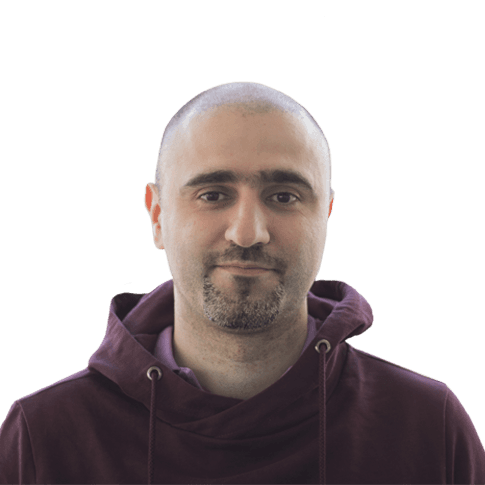
Mikhail Romanov
Senior Machine Learning Engineer, Yandex, Expert
Course length
Duration
Total hours
Credits
Language
Course type
Fee for single course
Fee for degree students
Skills you’ll learn
Overview
This is an introductory course to probability theory, a branch of mathematics concerned with understanding and quantifying randomness and uncertainty. Probability is useful in various fields such as statistics, finance, medicine, computer science, etc.
The mathematical framework for probability is built around sets. Thus, in the first several lessons of this course, we will review the basics of set theory and study some fundamental methods for counting the number of elements in finite sets (this part is usually referred to as Combinatorics).
Then, we will dive into the foundations of discrete probability theory. During the second week we will discuss different interpretations of probability, learn to compute the probability of an event, get familiar with some common probability distributions and explore joint distributions of several random variables.
Learning highlights
- Get a vivid introduction to combinatorics and probability theory.
- See the processes under the formulas and be capable of deriving all the formulas yourself.
- Build a strong foundation for statistics and machine learning taught in future courses.
- Know how to compute the number of permutations and combinations.
- Learn how to compute the probability of an event.
- Be familiar with the notions of independent events and conditional probability.
- Be able to apply Bayes’ rule.
- Be familiar with the notions of random variables and their distributions.
- Know how to compute the expected value and variance of a discrete random variable.
Course outline
15 classes
Session 1
Introduction to combinatorics: sets, operations with sets, counting. Measure of a set. Vienn’s diagram. Inclusion-exclusion principle.
Session 2
Combinatorics: Permutations and Combinations. Combinations with replacements. Combinations without replacements. Permutations. Binomial theorem.
Session 3
Classical probability: Definition. Probability of an event. Probability of intersection and union. Conditional probability and Full probability. Bayes Rule. Independent events.
Session 4
Random Values. Expected Value. Properties of Expected Value. Variance. Co-variance. Standard Deviation. Momentums.
Session 5
Discrete Distributions. Bernoulli Distribution and Binomial Distribution. Stirling’s formula. Poisson Distribution as a limit case of Binomial Distribution.
Session 6
Classical Probability Exam
Session 7
Paradoxes we have so far: Geometrical Probability, Probability of continuous value. Reimann VS Lebesgue Measure. Definition of Probability as a Lebesgue Measure. Probability Space. Expected Value as Lebesgue integral.
Session 8
Probability Function and Probability Density Functions (PDF). Continuous random variables.
Session 9
Continuous distributions. Normal Distribution. Characteristic function.* Central Limit Theorem (proof*). 5-sigma rule. Laplace Distribution.
Session 10
Multivariate Normal Distribution. Heart of SLAM: Kalman Filter. Other distributions and their properties: Student’s Distribution, Chi-squared distribution.
Session 11
Practice
Session 12
Hypothesis testing: p-value. Z-test. A-B tests.
Session 13
Heart of Machine Learning: Maximum Likelihood Method (ML). Least squares as ML for Normal distribution. Binary Cross Entropy as ML for Bernoulli Distribution.
Session 14
Maximal Aposterior Probability (MAP). Prior and regularization.
Session 15
Final Exam
Prerequisites
Calculus (derivative, extremums, integrals, series).
Familiarity with Python is a plus but not required.
Methodology
Each three-hour class is a mixture of a lecture, where the new material is presented, and a practical section, where problems related to the topic of the day are solved and discussed.
To further improve understanding of the taught material, tests and quizzes will be given regularly. Also, five graded homeworks will be assigned and will contribute to the final grade for the course.
There will be two interim exams at the end of the first two weeks, followed by the final exam on the final day of the course.
Grading
Mikhail Romanov, PhD, is a deep learning researcher and engineer. His experience includes deep learning for production, scientific computing and research, accompanied by teaching mathematics and machine learning in general.
His academic experience includes teaching courses at MIPT, HSE, Harbour Space Universities and online platforms. As a researcher, he has conducted research at the Technical University of Denmark, Mail.ru, Samsung Research, Quantori, and Yandex. In his research, his main areas of interest are depth estimation, optical flow, optimisation of neural networks, multi-task learning, self-supervised learning, LLMs and diffusion models. He has published papers on tomography, deep learning, scientific computing, computer vision, generative AI, and diffusion models.
See full profileApply for this course
Probability and Counting
by Mikhail Romanov
Total hours
45 Hours
Dates
Apr 18 - May 06, 2022
Fee for single course
€1500
Fee for degree students
€750
Explore related courses
Filter by campus:
How to secure your spot
Complete the form below to kickstart your application
Schedule your Harbour.Space interview
If successful, get ready to join us on campus
FAQ
Will I receive a certificate after completion?
Yes. Upon completion of the course, you will receive a certificate signed by the director of the program your course belonged to.
Do I need a visa?
This depends on your case. Please check with the Spanish or Thai consulate in your country of residence about visa requirements. We will do our part to provide you with the necessary documents, such as the Certificate of Enrollment.
Can I get a discount?
Yes. The easiest way to enroll in a course at a discounted price is to register for multiple courses. Registering for multiple courses will reduce the cost per individual course. Please ask the Admissions Office for more information about the other kinds of discounts we offer and what you can do to receive one.